Showing posts with label Middle East. Show all posts

Friday, 1 April 2016

RUSSIA AND SYRIA


RUSSIAN NUCLEAR-CAPABLE ISKANDER MISSILES DEPLOYED IN SYRIA

via DEBKAfile 

RUSSIA has deployed its most advanced tactical missile system, the Iskander-M, in SYRIA in the last few days, DEBKAfile reports exclusively from its military and intelligence sources. The RUSSIAN Iskander is capable of carrying a nuclear warhead and has never been made available to any foreign army for operational use.
No nuclear-capable surface missiles were deployed in any ARAB country bordering on ISRAEL since 2007 when CHINESE DF-21 missiles were installed in SAUDI ARABIA.


The RUSSIAN missiles (NATO codenamed SS-26) 
have a range of 500 kilometers (see map).

The Iskander’s transfer to the KALININGRAD enclave in the BALTIC SEA in 2015, putting it in range of Central and WESTERN EUROPE, was a mark of heightened tensions with the West over RUSSIA’S intervention in UKRAINE.

MISSILE DEPLOYMENT – A GAME CHANGER IN THE MIDDLE EAST

Its deployment in SYRIA, amid a bloody five-year civil war, is a game changer in terms of the balance of strength in the MIDDLE EAST. Its range - from the RUSSIAN HMEIMIM base in western SYRIA - covers all of ISRAEL up to the southern town of BEERSHEBA, points in TURKEY up to the outskirts of ANKARA and the eastern and central MEDITERRANEAN including CYPRUS.

The RUSSIAN decision to scale down its forces in SYRIA was only part of the picture: Warplanes and bombers are being pulled out, but as fast as they leave, they are being replaced by the most advanced missile systems in the RUSSIAN arsenal.

On March 15, MOSCOW announced that the formidable S-400 ground-to-air missiles would stay in SYRIA after the withdrawal. Ten days later, on March 25, the Iskander-M systems were in place. The Iskander-M is rated the top short-range ballistic missile in the world.

The combination, say DEBKAfile’s military sources, makes the HMEIMIM base the hub of the most sophisticated missiles in the MIDDLE EAST.

Its mobile launching vehicle carries two missiles. It only takes a few minutes to prepare them for launch; each may be fired separately. In flight, its operating team can retarget the weapon, adjusting it if necessary to hit  moving targets such as missile launchers, tank columns or supply convoys.

Image: DEBKAfile's 

Another special feature of the Iskander-M is the control of its warhead by an encoded radio signal that even UAVs or AWACS cannot intercept. The missile can therefore lock on the target without being shot down. The missile’s computer receives an image of the target, locks on it and zooms toward the target at supersonic speed.


The Iskander-M is adaptable for use against small or large targets and can easily evade air defense batteries. Its targets can be set by satellites, surveillance planes, intelligence mechanisms or even field soldiers directing artillery fire from images scanned to their computers. Furthermore, its independent navigation system is not affected by poor weather conditions, including fog or darkness, like other ballistic missiles. It is moreover almost impossible to pre-empt the launch of the Iskander-M due to the mobility of its launching system.

Saturday, 30 January 2016

SAUDI ARABIA ON THE BRINK OF REGIME CHANGE?


IS SAUDI ARABIA REALLY AT THE BRINK OF A 
ECONOMIC AND POLITICAL DOWNFALL?

It seems that SAUDI ARABIA has started to undergo the transformation various experts predicted. Those became obvious when the sitting king SALMAN BIN ABDULAZIZ AL SAUD replaced his deceased elder brother ABDULLAH BIN ABDULAZIZ AL SAUD in January 2015, and made a number of quite unusual arrangements within the ruling elite, appointing the head of the Ministry of Interior MUHAMMAD BIN NAYEF from ABDULLAH’S clan the Crown Prince, while his 33-year-old son MOHAMMAD BIN SALMAN AL SAUDFROM the SUDAIRY clan received the appointment of Deputy Crown Prince.


Even back then it was clear that within a short period of time the king would try to hand over all power in the country to his own son by sidestepping MUHAMMAD BIN NAYEF, while he himself would retire due to Alzheimer’s disease, becoming sort of a “king-father” with no real power, but with the right to an advisory vote on important decisions. Needless to say, it’s a direct violation of the tradition of succession to the throne from brother to brother that has been in place in SAUDI ARABIA that is going to be replaced by the father-to-son succession. To make such a transition one should be able to carry out a coup d’etat or win the approval of the succession board, which is formed according to different sources by 7 or 11 members of the AL SAUD dynasty.

QUARREL INSIDE THE HOUSE SAUD BECOMES STRONGER AMIDST ECONOMIC DOWNTURN


Now it seems that the wheels of the political machine are moving again. Recent reports from RIYADH indicated that his disease is taking a toll on the king and he wants to renounce his reign in favor of the Crown Prince. But then neighboring states, especially QATAR and the UNITED ARAB EMIRATES, started hinting that the members of the SAUDI royal family along with the sheikhs of the strongest tribes, which are the foundation of AL SAUD’S rule, are extremely dissatisfied with the sharp deterioration of the economic and social situation in the country, leading to a major drop in their personal incomes. It is no secret that RIYADH increased the volume of oil production to weaken the positions of its main competitors – RUSSIA, IRAN and VENEZUELA. But the kingdom had to take a punch as well, it was forced to unseal its reserve fund and cut the funding of numerous social programs.

GEOPOLITICAL AND ECONOMIC CHESS GAME AMONG SAUDI ARABIA, IRAN, RUSSIA, SYRIA AND IRAQ

And then came the execution of 47 Shia public figures, including the popular human rights activist NIMR BAQIR AL-NIMR. The executions were designed as a form of retaliation to IRAN and HEZBOLLAH for the help they have provided to the SYRIAN people in the fight against pro-SAUDI militants.

Background Information:


This step provoked massive unrest in the SHIA areas of the kingdom, the areas that produce the better part of all SAUDI oil. The country has found itself on the brink of a civil war and a military conflict with IRAN at the same time, which has also provoked major discontent in the West. After all, the West needs a politically loyal IRAN, a country in which huge investments can be made, especially in oil and gas sectors, in order to push RUSSIAN out of the EUROPEAN gas market and the international oil markets at the same time. In this context TEHRAN is forced to carry on relying on MOSCOW in the confrontation with SAUDI ARABIA to ensure its safety and continue providing military assistance to SYRIA, IRAQ and SHIA rebels in YEMEN.

SAUDI KING TO RENOUNCE HIS THRONE TO HIS SON, MOHAMMAD BIN SALMAN AL SAUD

Now the highly respected Institute for GULF AFFAIRS is stating that the king of SAUDI ARABIA SALMAN BIN ABDULAZIZ AL SAUD is preparing to renounce the throne in favor of his son MOHAMMAD BIN SALMAN AL SAUD, and has since brought his country to the brink of a disaster.

It means that the 80-year-old SALMAN is trying desperately hard to persuade his brothers on the succession board to allow him to change the principle of succession of the SAUDI throne, since he’s ready to leave, but not so ready for his nephew MOHAMMAD BIN SALMAN AL SAUD to rule the country.


Storm clouds over Mecca Image by: Amr Abdallah Dalsh / REUTERS
What the king has been doing is allegedly done “only for the sake of the stability of the kingdom.” Although the reality of the situation is clear – should SALMAN retain his position, the disintegration of the kingdom is imminent, with certain Shia areas breaking away, while the regions on the border with YEMEN which are mostly populated by YEMENI tribes, more than happy to return home. Moreover, the Minister of Interior used to be a habitual cocaine user, so he was only able to “produce” two daughters, and now he’s somewhat incapable of producing more children. Should the king manage to carry out the above described scheme, he will become the first SAUDI monarch to leave the throne to his son.

HAVE FALLING OIL PRICES REALLY STRUCK SAUDI ARABIA AT ITS HEART?

And the fact that there’s a growing crisis in SAUDI ARABIA was evident from the cuts in subsidies and bonuses that king SALMAN started at the beginning of this year to reduce the country’s total dependence on oil. After decades of extensive use of oil revenues to subsidize companies’ payment of generous salaries and providing enormous social benefits, falling oil prices struck SAUDI ARABIA at its heart.

It’s enough to say that revenues from oil exports in 2015 alone dropped by half. Ultimately it’s hard to say which country suffers the most from these oil wars – RUSSIA OR SAUDI ARABIA, since the latter has virtually no other sectors to support the economy. SAUDI economist TURKI FADAAK believes that SAUDI ARABIA is exiting the policy of “universal welfare”, so there’s an ongoing psychological shift in the minds of the ruling elite of the state. FADAAK is convinced that the ultimate aim of king SALMAN’S measures is to eliminate the SAUDI dependency on oil. But is it really? According to leading international experts – the answer is a resounding “no”, with all the arguments to the contrary nothing more than fantasy.

Although initially it seemed that SALMAN, who came to power after the death of his brother, King ABDULLAH, will continue his course, after assuming the throne SALMAN generously spent over 30 billion dollars from the budget on bonuses for civil servants, military personnel, and students. Additionally, prices for basic goods and services, including fuel, electricity and water prices were kept at extremely low levels due to government subsidies from oil revenues. However, due to falling oil prices, under the pressure of such costs the budget started to rupture. The most important thing now for the kingdom is to execute the transition from the extremely lavish social security system to a productive economy, but then the subjects of the king will be forced to cut their costs, and it looks that they do not agree with this notion. And accusations in the imminent economic collapse will go SALMAN’S way, so it is better for him to leave now, before protests even start.

CHANGE IN TACTICS

It is curious that SAUDI ARABIA has been rather realistic about its budget for the year 2016, since it was based on the average price of oil keeping at the level 29 dollars per barrel. Last year, the SAUDI budget deficit amounted to almost 98 billion dollars and the costs were considerably higher than it was originally planned due to bonuses for civil servants, military personnel and retirees. In 2016 the authorities decided to put up to 49 billion dollars into a special fund to provide funding for the most important projects in case oil prices drop even further. But it was SAUDI ARABIA back in 2014 that proposed new tactics for OPEC, which implied that there would be no cuts in the level of production, the tactics that drove oil prices to today’s levels.

So we are to learn pretty soon should RIYADH choose the path of the utter and complete collapse of the kingdom, or the path of giving power to the young and pragmatic technocrats who are going to pursue a comprehensive oil policy. Either way, SAUDI ARABIA will be forced to put an end to the costly military adventures in SYRIA and YEMEN as well as its confrontations with RUSSIA and IRAN.


By Peter Lvov via New Eastern Outlook

Friday, 29 January 2016

MIDDLE EAST: WHAT’S REALLY GOING ON WITH THE OIL?


TOO MANY THINGS DON’T CALCULATE TODAY IN REGARD TO THE DRAMATIC FALL IN THE WORLD OIL PRICE

NEXT OIL SHOCK IMMINENT? 

If there is any single price of any commodity that determines the growth or slowdown of our economy, it is the price of crude oil. Too many things don’t calculate today in regard to the dramatic fall in the world oil price. In June 2014 major oil traded at $103 a barrel. With some experience following the geopolitics of oil and oil markets, one can smell a big skunk. Here are some things that simply don’t add up.
On January 15 the US benchmark oil price, WTI (WEST TEXAS INTERMEDIATE), closed trading at $29, the lowest since 2004. True, there’s a glut of at least some 1 million barrels a day overproduction in the world and that’s been the case for over a year.
True, the lifting of IRAN sanctions will bring new oil on to a glutted market, adding to the downward price pressure of the present market.

Background Information: OIL POLICIES


However, days before US and EU sanctions were lifted on IRAN on January 17, SEYYID MOHSEN GHAMSARI, the head of international affairs at National IRANIAN Oil Company stated that IRAN, “…will try to enter the market in a way to make sure the boosted production will not cause a further drop in prices…We will be producing as much as the market can absorb.”  So the new entry of IRAN post-sanctions onto world oil markets is not the cause for the sharp oil fall since January 1.

Also not true is that oil import demand from CHINA has collapsed with a supposed collapse of CHINA’S economy. In the year to November 2015 CHINA imported more, significantly more, 8.9% more, year on year, to 6.6 million barrels a day to become the world’s largest oil importer.

GIVEN THE CURRENT GEOPOLITICAL EVENTS, IT WOULD SEEM THAT THE PRICE OF OIL SHOULD RISE, NOT FALL


Add to the boiling cauldron that constitutes today’s world oil market the political risk that has been building dramatically since September, 2015 and the RUSSIAN decision to come to the call of SYRIA’S President, BASHAR AL ASSAD with formidable airstrikes against terrorist infrastructure. Add as well the dramatic break in relations between RECEP TAYYIP ERDOÄžAN’S TURKEY and MOSCOW since TURKEY, a NATO member, committed a brazen act of war by shooting down a RUSSIAN fighter jet over SYRIAN airspace. All of this would suggest prices of oil should be going up, not down.

SAUDI’S STRATEGIC EASTERN PROVINCE

Then, for good measure, throw in the insanely provocative decision by SAUDI Defense Minister and de facto king, Prince MOHAMMED BIN SALMAN, to execute SHEIKH NIMR AL-NIMR, a SAUDI citizen. AL-NIMR, a respected SHI’ITE religious leader was charged with terrorism for calling in 2011 for more rights for SAUDI SHI’ITES. There are approximately 8 million SAUDI MUSLIMS loyal to SHI’ITE teachings rather that the ultra-strict WAHHABI SUNNI strain. His crime was to support protests calling for more rights for the oppressed SHIA minority, perhaps some 25% of the SAUDI population. The SHI’ITE population of SAUDIS is overwhelmingly concentrated in the Kingdom’s EASTERN PROVINCE.


The EASTERN PROVINCE of the Kingdom of SAUDI ARABIA is perhaps the most valuable piece of real estate on the planet, double the area of the Federal Republic of GERMANY but with a mere 4 million people. SAUDI ARAMCO, the state-owned oil company is based in DHAHRAN in the EASTERN PROVINCE.


The main SAUDI oil and gas fields are mostly in the EASTERN PROVINCE, onshore and offshore, including the world’s largest oil field, GHAWAR. Petroleum from the SAUDI fields, including GHAWAR, is shipped to dozens of countries from the oil port terminal of the RAS TANURA complex, the world’s biggest crude oil terminal. Some 80% of the near 10 million barrels of oil a day pumped out by SAUDI goes to RAS TANURA in the PERSIAN GULF where it is loaded on to supertankers bound for the west.

The EASTERN PROVINCE is also home to SAUDI ARAMCO’S ABQAIQ Plants facility, their biggest oil processing and crude stabilization facility with a capacity of 7 million barrels per day. It’s the primary oil processing site for ARABIAN extra light and ARABIAN light crude oils, and handles crude oil pumped from GHAWAR field.

TUG OF WAR - SHIA VERSUS SUNNI 

And it also happens that the majority of oil field and refinery blue collar workers in of the EASTERN PROVINCE are…SHI’ITE. They are said also to be sympathetic to the just-executed SHIA cleric, SHEIKH NIMR AL-NIMR. In the late 1980’s the SAUDI HEZBOLLAH AL-HEJAZ, led several attacks on oil infrastructure and also murdered SAUDI diplomats. They were allegedly trained in Iran.

And now there is a new destabilizing element to add to the political tensions building between SAUDI ARABIA and ERDOGAN’S TURKEY on the one side, flanked by servile ARAB GULF COOPERATION COUNCIL states, and on the other ASSAD’S SYRIA, IRAQ with a 60% SHI’ITE population and neighboring IRAN, aided presently militarily by RUSSIA. Reports are that the instable 30-year old Prince BIN SALMAN is about to me named King.


On January 13, the Gulf Institute, a MIDDLE EAST think tank, in an exclusive report, wrote that 80-year old SAUDI King SALMAN AL-SAUD plans to abdicate his throne and install his son MOHAMMED as king. They report that the present King “has been making the rounds visiting his brothers seeking support for the move that will also remove the current crown prince and AMERICAN favorite, the hardline MOHAMMED BIN NAIF, from his positions as the crown prince and the minister of interior. According to sources familiar with the proceedings, SALMAN told his brothers that the stability of the SAUDI monarchy requires a change of the succession from lateral or diagonal lines to a vertical order under which the king hands power to his most eligible son.”

On December 3, 2015, the GERMAN BND intelligence service leaked a memo to the press warning of the increasing power being acquired by Prince SALMAN, someone they characterized as unpredictable and emotional. Citing the kingdom’s involvement in SYRIA, LEBANON, BAHRAIN, IRAQ and YEMEN, the BND stated, referring to Prince SALMAN, “The previous cautious diplomatic stance of older leaders within the royal family is being replaced by a new impulsive policy of intervention.”


Background Information: SAUDI ROYALTY


YET OIL PRICES FALL?

The ominous element in this more than ominous situation revolving around the center of world petroleum and natural gas reserves, the MIDDLE EAST, is the fact that in the recent weeks oil prices, which had temporarily stabilized at an already low $40 range in December, now have plunged another 25% to around $29, outlook grim. CITIGROUP has forecast $20 oil is possible. GOLDMAN SACHS recently came out saying that it may take lows of $20 a barrel to restabilize world oil markets and get rid of the glut of supply.
According to F. WILLIAM ENGDAHL’S view there is something very big, very dramatic building up in world oil markets over the coming several months, something most of the world doesn’t expect.

DUBIOUS WHEELING AND DEALING OF SHADOW BANKS AND INTERNATIONAL FINANCIAL INSTITUTIONS 

The last time GOLDMAN SACHS and their WALL STREET cronies made a dramatic prediction in oil prices was in summer 2008. At that time, amid the growing pressures on WALL STREET banks of the spreading US sub-prime real estate meltdown, just before the LEHMAN BROTHERS collapse of September that year, GOLDMAN SACHS wrote that oil was headed for $200 a barrel. It had just hit a high of $147. At that time ENGDAHL wrote an analysis saying just the opposite was likely, based on the fact that there was a huge oversupply in world oil markets that curiously, was only being identified by LEHMAN BROTHERS. He was told by an informed CHINESE source that WALL STREET banks like JP MORGAN CHASE were hyping the $200 price to convince AIR CHINA and other big CHINA state oil buyers to buy every drop of oil at $147 it could before it hit $200, an advice that fed the rising price.

Then by December, 2008 the Brent benchmark oil price was down to $47 a barrel. The LEHMAN Crisis, a deliberate political decision of US Treasury Secretary a former GOLDMAN SACHS chairman, HENRY PAULSEN, in September 2008, plunged the world into financial crisis and deep recession in the meantime. Did PAULSEN’S cronies at GOLDMAN SACHS and other key WALL STREET mega-banks such as CITIGROUP or JP MORGAN CHASE know in advance that PAULSEN was planning the LEHMAN crisis to force Congress to give him carte blanche bailout powers with the unprecedented TARP funds of $700 billion? In the event, GOLDMAN SACHS and friends reportedly made a gigantic profit betting against their own $200 predictions using leveraged derivatives in oil futures.

KILLING THE SHALE OIL ‘COWBOYS’ FIRST

Today the US shale oil industry, the largest source of rising US oil output since 2009 or so, is hanging by its fingernails on the edge of a cliff of massive bankruptcies. In recent months shale oil production has barely begun to decline, some 93,000 barrels in November, 2015.

The Big Oil cartel–EXXONMOBIL, CHEVRON, BP and SHELL–began dumping their shale leases onto the market two years ago. The shale oil industry in the US today is dominated by what BP or EXXON refer to as “the cowboys,” mid-sized aggressive oil companies, not the majors. WALL STREET banks like JP MORGAN CHASE or CITIGROUP who historically finance Big Oil, as well as Big Oil itself, clearly would shed no tears at this point were the shale boom to bust, leaving them again in control of the world’s most important market. The financial institutions who lent hundreds of billions of dollars to the shale “cowboys” in the past five years have their next semi-annual loan review in April. With prices hovering at or near the $20 range, we can expect a new, far more serious wave of actual shale oil company bankruptcies. Unconventional oil, including CANADA’S huge ALBERTA TAR SANDS oil will soon be a thing of the past too.


That alone will not restore oil to the $70-90 levels that the big oil industry players and their WALL STREET banks would find comfortable. The glut coming out of the MIDDLE EAST from SAUDI ARABIA and her GULF ARAB allies has to be dramatically cut. Yet SAUDIS show no sign of doing so. This is what seems disturbing in regards to the entire picture.

IS SOMETHING VERY UGLY BREWING IN THE PERSIAN GULF THAT WILL DRAMATICALLY PUSH OIL PRICES UP LATER THIS YEAR?

Is a real shooting war between SHI’ITE and SAUDI WAHHABI oil states brewing? Until now it has been a proxy war in SYRIA primarily. Since the execution of the SHI’ITE cleric and IRANIAN storming of the SAUDI Embassy in TEHERAN, leading to a break in diplomatic ties by SAUDI and other SUNNI GULF ARAB states, the confrontation has become far more direct.


Dr. HOSSEIN ASKARI, former adviser to the SAUDI Finance Ministry, stated, “If there is a war confronting IRAN and SAUDI ARABIA, oil could overnight go to above $250, but decline back down to the $100 level. If they attack each other’s loading facilities, then we could see oil spike to over $500 and stay around there for some time depending on the extent of the damage.”

Everything points towards another worldwide oil shock. It seems it’s almost always about oil. As HENRY KISSINGER reportedly said back during another oil shock in the mid-1970’s when EUROPE and the US faced an OPEC oil embargo and long lines at the gas pumps, “If you control the oil, you control entire nations.” That obsession with control is rapidly destroying our civilization. It’s time to focus on peace and development, not on competing to be the biggest oil mogul on the planet.


Adapted by Geopolitical Analysis and Monitoring from the article originally written by  F. William Engdahl who is a strategic risk consultant and lecturer, he holds a degree in politics from Princeton University and is a best-selling author on oil and geopolitics, exclusively for the online magazine “New Eastern Outlook”.

Saturday, 16 January 2016

SAUDI ARABIA AND IRAN – BOUND FOR AN ARMED CONFLICT?


WAR BETWEEN SAUDI ARABIA AND IRAN 
COULD SEND OIL PRICES 
TO $250

The rift between SAUDI ARABIA and IRAN has quickly ballooned into the worst conflict in decades between the two countries.

The back-and-forth escalation quickly turned the simmering tension into an overt struggle for power in the MIDDLE EAST. First, the execution of a prominent SHIITE cleric prompted protestors to set fire to the SAUDI embassy in TEHRAN. SAUDI ARABIA cut off diplomatic relations and kicked out IRANIAN diplomatic personnel. TEHRAN banned SAUDI goods from entering IRAN. Worst of all, IRAN blames SAUDI ARABIA for an airstrike that landed near its embassy in YEMEN.


SAUDI ARABIA’S SUNNI allies in the ARABIAN PENINSULA largely followed suit by downgrading diplomatic ties with IRAN. However, recognizing the dire implications of a major conflict in the region, most of SAUDI ARABIA’S GULF STATE allies did not go as far as to entirely sever diplomatic relations, as SAUDI ARABIA did. BAHRAIN, the one nation most closely allied with RIYADH, was the only one to take such a step.

TUG OF WAR IN THE MIDDLE EAST

Many of them are concerned about a descent to further instability. Nations like KUWAIT and QATAR have trade links with IRAN, plus SHIITE populations of their own. Crucially, QATAR also shares a maritime border with IRAN as well as access to massive natural gas reserves in the PERSIAN GULF. These countries are trying to split the difference between the two belligerent nations in the MIDDLE EAST. "The SAUDIS are on the phone lobbying countries very hard to break off ties with IRAN but most GULF STATES are trying to find some common ground," a diplomat from an ARAB country told Reuters. "The problem is, common ground between everyone in this region is shrinking."

The effect from the brewing conflict on oil is murky, but for now it is not having a bullish impact. In the past, geopolitical tension in the MIDDLE EAST, especially involving large oil producers, would add a few dollars to the price of oil. This risk premium captured the possibility of a supply disruption into the price of a barrel of crude. However, recent events barely registered in oil trading. That is because the global glut in oil supplies loom larger than any potential for a supply disruption. Oil dropped to nearly $30 per barrel on January 12 and oil speculators are not paying any attention to the tension in the MIDDLE EAST.

WHAT IF THE CURRENT “COLD WAR” BETWEEN SAUDI ARABIA AND IRAN TURNED HOT? – OIL PRICES WOULD SOAR    

Also, the conflict could simply manifest itself in an intensified battle for oil market share. IRAN has put forth aggressive goals to ramp up oil production in the near-term. And SAUDI ARABIA continues to produce well in excess of 10 million barrels per day while discounting its crude in several key markets, particularly in EUROPE in order to box out IRAN.
But what if the current “Cold War” between SAUDI ARABIA and IRAN turned hot?

SAUDI ARABIA has a variety of reasons to not back down, not the least of which is the very real sense of being besieged on multiple fronts. An article in The New Statesman by former BRITISH Ambassador to SAUDI ARABIA, JOHN JENKINS, clearly laid out the threats that SAUDI ARABIA sees around every corner: extremists at home; a growing IRAN; toppled allies from the Arab Spring; low oil prices; and a fractured relationship with the UNITED STATES. The nuclear deal between IRAN and the WEST was confirmation on the feeling in RIYADH that it is becoming increasingly insecure.

PROXY BATTLES IN YEMEN AND SYRIA

Already the two rivals have engaged in proxy battles in YEMEN and SYRIA, supporting opposite sides in those wars. A full on direct military confrontation would be something entirely different, however. It would have catastrophic consequences for oil markets, even when taking into account the current supply overhang. Dr. HOSSEIN ASKARI, a professor at The George Washington University, told Oil & Gas 360 that a war between the two countries could lead to supply disruptions, with predictable impacts on prices.


 “If there is a war confronting IRAN and SAUDI ARABIA, oil could overnight go to above $250, but decline [back] down to the $100 level,” said ASKARI. “If they attack each other’s loading facilities, then we could see oil spike to over $500 and stay around there for some time depending on the extent of the damage.”

WHILE NOT IMPOSSIBLE, WAR IS SPECULATIVE AT THIS POINT.

Also, $250 and $500 per barrel are numbers pulled out of thin air, and may seem a bit sensationalist. But despite the glut in global oil production – somewhere around 1 mb/d – the margin from excess to shortage is thinner than most people think. OPEC is producing flat out and spare capacity is actually remarkably low right now. The EIA estimated that OPEC spare capacity stood at just 1.25 mb/d in the third quarter of 2015, the lowest level since 2008.

As a result, even though it remains a remote possibility, direct military confrontation between SAUDI ARABIA and IRAN could well put oil back into triple-digit territory in short order.


By James Stafford via Oilprice.com

Sunday, 27 December 2015

THEOLOGY AND ITS GEOPOLITICAL IMPACT


THE ORIGIN OF JIHADISM


So: «the WAHHABIS», who were a MUSLIM version or mirror-image of CHRISTIANITY’S Medieval CRUSADES against MUSLIMS and JEWS, were defeated by the OTTOMAN TURKS, which were a liberal branch of ISLAM. Here is the instruction that the founder of the OTTOMAN EMPIRE, OSMAN I, gave to his son; and it could hardly have been farther away from the harsh teachings of WAHHAB:

Last testament

In directing his son to continue the administrative policies set forth by SHEIK EDEBALI, OSMAN stated:

Son! Be careful about the religious issues before all other duties. The religious precepts build a strong state. Do not give religious duties to careless, faithless and sinful men or to dissipated, indifferent or inexperienced people. And also do not leave the state administrations to such people. Because the one with fear of God the Creator, has no fear of the created. One who commits a great sin and continues to sin cannot be loyal. Scholars, virtuous men, artists and literary men are the power of the state structure. Treat them with kindness and honor. Build close relationship when you hear about a virtuous man and give wealth and grant him...Put order the political and religious duties. Take lesson from me so I came to these places as a weak leader and I reached to the help of God although I did not deserve. You follow my way and protect DIN-I-MUHAMMADI and the believers and also your followers. Respect the right of God and His servants. Do not hesitate to advise your successors in this way. Depend on God’s help in the esteem of justice and fairness, to remove the cruelty, attempt this in every duty. Protect your public from enemy's invasion and from the cruelty. Do not behave any person in an unsuitable way with unfairness. Gratify the public and save all of their sake.

RELIGIONS ENCOURAGE BIGOTRY

That emphasis upon «kindness», and upon «God» providing «help» to individuals who «did not deserve» and «to remove the cruelty», etc., isn’t at all similar to WAHHAB’S teachings, but far closer instead to ST. PAUL’S preachment of the otherwise harsh God’s mercy (e.g., GALATIANS 2:21: «I refuse to reject God’s mercy. If a person is put right with God by adhering to the [harsh] laws of God, then CHRIST died for nothing!») as the very foundation of CHRISTIANITY. 

That’s what softened the harshness of the JEWISH God, the God in the TORAH, the first five books of the CHRISTIAN Bible. Unfortunately, PAUL and his followers who wrote and assembled the New Testament also introduced anti-Antisemitism, a condemnation of the JEWS and not of their horrible Scripture: e.g., PAUL’S own 1 THESSALONIANS 2:14-15 – «The JEWS killed the Lord JESUS and the prophets, and persecuted us. They displease God and are everyone’s enemies». The PAULINISTS’ accusation that JEWS killed God was basic to pogroms and other discrimination's against JEWS, which only served to increase JEWS’ own tribalism. All religions encourage bigotry; and, in our still highly religious world (believing even the crackpot biblical ‘history’ that the Earth is only 6,000 years old, which is scientifically ridiculous but part of the creation-myth), aristocracy and religion remain, even today, as Mankind’s curses, but especially in fundamentalist SUNNI countries such as SAUDI ARABIA, which is the ultimate model of a nation that’s both aristocratic and theocratic – the most dangerous of all possible combinations for a nation.

AS WIKIPEDIA FURTHER SAYS:

The alliance between followers of [MUHAMMAD] IBN ABD AL-WAHHAB and MUHAMMAD BIN SAUD'S successors (the House of SAUD) proved to be a rather durable alliance. The house of BIN SAUD continued to maintain its politico-religious alliance with the WAHHABI sect through the waxing and waning of its own political fortunes over the next 150 years [but actually more like 300 years, inasmuch as it started in 1744, when SAUD and WAHHAB swore their oaths to each other, right up to the present, and so will be 300 years old in 2044], through to its eventual proclamation of the Kingdom of SAUDI ARABIA in 1932, and then afterwards, on into modern times. Today MOHAMMED BIN ABD AL-WAHHAB'S teachings are state-sponsored and are the official form of SUNNI ISLAM in 21st century SAUDI ARABIA...

MECCA AND OIL

With the help of funding from petroleum exports (and other factors), the movement underwent «explosive growth» beginning in the 1970s and now has worldwide influence.

Today’s JIHADISM is simply oil-and-gas-funded WAHHABISM that got out of control in non-WAHHABIST-SALAFIST-led countries. During 1973, US President RICHARDNIXON de-dollarized gold   , and quickly petroleum became dollarized (the global commodity-basis for currencies). SAUDI ARABIA had more of the new gold than any other country did. And, already, the entire MUSLIM world was bowing to the SAUDS’ MECCA; so, they had both MECCA and oil. And the SAUDS, as the most oil-rich people, now became the emperors of ARABIA, having under them the kings of the other major ARABIC SUNNI oil sheikdoms – or, as noted before:

THE CONTROLLING ENTITIES BEHIND AMERICAN FOREIGN POLICIES since at least the late 1970s have been the SAUD family and the SAUDS’ subordinate ARABIC aristocracies, which are the ones in QATAR (THE AL-THANIS), KUWAIT (THE AL-SABAHS), TURKEY (THE TURKISH ERDOÄžANS, A NEW ROYALTY), and UAE (its six royal families: the main one, the AL-NAHYANS in ABU DHABI; the other five: the AL-MAKTOUMS IN DUBAI, AL-QASIMIS IN SHARJAH, AL-NUAIMIS IN AJMAN, AL-MUALLA UMS IN QUWAIN, AND AL-SHARQIS IN FUJAIRAH). Other SAUDI-dominated nations – though they’re not oil-rich (more like TURKEY in this regard) – are PAKISTAN and AFGHANISTAN.

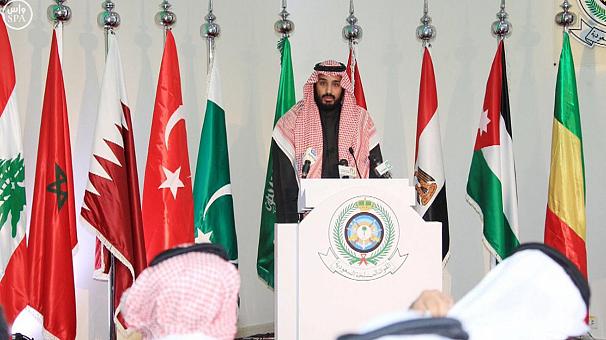
SUNNI-ISLAMIC GLOBAL MILITARY ALLIANCE

TURKEY is a special case: a member not only of AMERICA’S 28-nation NATO alliance, but also of SAUDI ARABIA’S new 34-nation+ SUNNI-ISLAMIC global military alliance. In 1922, TURKEY’S non-sectarian General KEMAL ATATURK had ended the liberal Islamic dominance that had earlier been imposed under OSMAN I, and he established instead the non-religious nation of TURKEY, which has terminated in recent decades with the increasing penetration into TURKEY of SALAFIST or JIHADIST (i.e., WAHHABIST-SALAFIST) ISLAM: aiming for the CALIPHATE or FUNDAMENTALIST-ISLAMIC empire, not as pre-1922 – not as the LIBERAL-ISLAMIC OTTOMAN EMPIRE – but instead as a CALIPHATE (fundamentalist-ISLAMIC empire).


SUNNI-ISLAMIC GLOBAL MILITARY ALLIANCE
The «CALIPHATE» is supposed to be imposed by a descendant of MUHAMMAD himself, the founder of ISLAM. Only such a descendant may found or start the CALIPHATE – go beyond being only a God-authorized national ruler, to become the God-authorized ruler of the world. For example, the founder of ISIS (also called IS, ISIL, and DAESH), ABU BAKR AL-BAGHDADI, claims to be a descendant of MUHAMMAD.

TRIBALISM IS THE SAME AS ARISTOCRACY

This can be accurately understood only within the context of understanding the tribalism of all AFRICAN, including of all ARABIC, cultures (as well as of JEWISH, and other tribal religions). TRIBALISM is the same as aristocracy, except it’s the other side of the phenomenon: the mass-side, instead of the elite (i.e., aristocratic) side. Both sides are the belief that ancestors – or, in ARABIC, «SALAFIS» – determine a person’s status or degree of authority. Aristocracy and tribalism go together, just like heads-and-tails on the opposite sides of a coin do.


When MUHAMMAD IBN SAUD and MUHAMMAD IBN WAHHAB created in 1744 what would become SAUDI ARABIA, it was upon the basis of two things that are at the root of all conservatism: tribalism and religion. The leaders of a tribe are its aristocracy, and the leaders of a religion are its clergy. Consequently, SAUDI ARABIA might appear to be a perfect conservative nation: the aristocracy (the descendants of MUHAMMAD IBN SAUD), and the clergy (the clerics of WAHHABISM), are united to control the nation. However, there is a flaw in the SAUDI-WAHHABIST nation: the aristocratic element in it, the SAUD family, are not descended from MUHAMMAD. The SUNNI ideal is very much the unification of church-and-state; but, in SHIITE ISLAM, such unification between the two isn’t necessary.

Consequently, only the psychopathy of SAUDI ARABIA’S aristocracy and clergy can sustain their rule in a tribal-religious culture that violates the basic conservative principle of descent from the Prophet, who was himself a conqueror. (MUHAMMAD, as both the head-of-state and the head-of-church; is the SUNNI ideal. SHIIA ISLAM broke somewhat away from that ideal, so isn’t quite as strongly wedded to it.)
Because ABU BAKR AL-BAGHDADI claims to be both head-of-state and head-of-sect, ISIS presents a threat to the Sauds   that even AL-QAEDA (from which ISIS itself descended) did not: OSAMA BIN LADEN didn’t claim to be descended from MUHAMMAD. The SAUDI religion didn’t demand he be, any more than it demanded MUHAMMAD IBN SAUD to be. But, the 100% fundamentalists do demand it – and ISIS is 100%.


Therefore, the ISLAMIC STATE (ISIS, ISIL, DAESH) endangers the SAUDS in a way that AL-QAEDA didn’t. IS is even more fundamentalist than WAHHABISM-SALAFISM. It’s unadulterated ISLAM, like MUHAMMAD’S legendary (and probably also historical) own original.

RELIGIOUS-ARISTOCRATIC VERSUS SECULAR-DEMOCRATIC

However, the major distinction between WAHHABISM and ISIS is the threat that IS poses to the SAUD family.    Other than that, the SAUDS’ KINGDOM is ISLAMIC.

For example, just like the BIBLE – both its OLD AND NEW TESTAMENT – all Fundamentalist ISLAM authorizes slavery (as, indeed, does FUNDAMENTALIST JUDAISM, and FUNDAMENTALIST CHRISTIANITY); and here is how that plays out in the QURANIC nation of SAUDI ARABIA:

The official SAUDI Information Agency issued, on 7 November 2003, a news-report, «Author of SAUDI Curriculums Advocates Slavery», which said: «The main author of the SAUDI religious curriculum expressed his unequivocal support for the legalization of slavery in one of his lectures recorded on a cassette and obtained exclusively by SIA news. Leading government cleric SHEIKH SALEH AL-FAWZAN is the author of the religious books currently used to teach 5 million SAUDI students… AL-FAWZAN is member of the Senior Council of Clerics, SAUDI ARABIA’S highest religious body… According to SAUDI liberal writer and scholar SHEIKH HASSAN AL-MALIKI, AL-FAWZAN threatened him with beheading if he continued in his criticism of the extremist WAHHABI interpretation of ISLAM».


That’s remarkably honest reporting, because it’s about their own country. But, in the less-fundamentalist Western world, the presumption that slavery is to be enforced instead of overthrown, isn’t generally accepted. If there is a «cultural war», it’s ancient versus modern: it is religious-aristocratic on the one side, versus secular-democratic on the other.

The SAUDI ARAB News headlined on 27 March 2006, «Why Is There So Much Hate Inside Us?» and a columnist, ABDULLAH AL-MUTAIRI, wondered, «why young SAUDIS hate foreign workers, particularly INDIANS, PAKISTANIS and BANGLADESHIS.» He even wondered: «Do we adult SAUDIS who sponsor and employ foreigners fulfill the conditions of their contracts – which both we and they have signed? How many housemaids never get a day off? I remember a worker in the school where I work who was on the job every day and who had not been paid for six months. I remember another unpaid worker who asked humbly and politely for his dues and received nothing but curses and insults. » Basically, treating the dependent like filth is considered okay. Obligations are only one-way, and that’s the basic principle in any aristocratic culture.

The SAUDI GAZETTE headlined on 29 November 2013, «What will happen when you allow your employee to keep his identity papers», and reported that, «Sireen Jamal, owner of a beauty salon, said her driver [a slave] had escaped ... with her car», because he had identity papers and could therefore get out of the country. «Dr SUHAILA ZAIN AL-ABIDEEN, a human rights activist and a member of the SHOURA Council, opposed the idea of giving expatriate workers their identity papers. ‘Whenever the expat worker has his papers with him, he may not hesitate to escape whenever he has the chance,’ she said». And the speaker, Dr AL-ABIDEEN, was «a human rights activist».

US-SAUDI ALLIANCE IS SOMEWHAT LIKE THE ARISTOCRATIC-THEOCRATIC ALLIANCE. THEY DEPEND ON EACH OTHER

And, of course, the SAUDS don’t pay only to ISIS head-choppers, but also to their own. These are AMERICA’S allies, but these ones are WAHHABIST-SALAFISTS. The US can be allied with them, but not with RUSSIA. The US aristocracy insists upon taking control over RUSSIA’S natural resources.

So: although those oil-kingdoms buy more weapons from the UNITED STATES than any other country (and SAUDI ARABIA is AMERICA’S biggest-of-all foreign purchaser of weapons), their ethical system is locked back in the years when MUHAMMAD lived. It was basically the same ethical system that existed when JESUS did, and even when MOSES did. But whereas the UNITED STATES and other Western countries are embarrassed by the barbarism in their ‘holy Scriptures,’ SAUDI ARABIA and the other FUNDAMENTALIST-SUNNI countries simply take for granted that barbarism, as the way things ought to be, and even (such as in ISIS) as the way things must become.

And the UNITED STATES aristocracy and government is allied with it, but puts on the best pretense they can that they oppose it. This also means that the UNITED STATES is backing the Jihadists to overthrow the secular SHIITE BASHAR AL-ASSAD IN SYRIA. AMERICA is truly extremism’s friend. It’s not as important to JIHADISM as the SAUDS are, but almost. The US-SAUDI alliance is somewhat like the aristocratic-theocratic alliance. They depend on each other.

THE ENERGY EQUATION

And both of them want to cripple and take control over the world’s second-largest oil-power, RUSSIA, which means first overthrowing RUSSIA-friendly leaders such as SADDAM HUSSEIN, MUAMMAR GADDAFI, VIKTOR YANUKOVYCH, and BASHAR AL-ASSAD.

So: that’s the origin of Jihadism. AL-QAEDA’S version might be called ‘moderate’ extremism; ISIS’s would be ‘extreme’ extremism (sort of like BARRY GOLDWATER’S «Extremism in defense of … is no vice»; and, if that’s «liberty», then breakouts from prison constitute no vice). 

After all, how else could the aristocracy and the clergy fool the public, in a ‘democracy’? The public need to think that the system works for them, and that their enemies are mainly foreign, not mainly members of the same nation, and maybe even of the same religion, as themselves.

Many people who are born MUSLIMS are aware of the threat that their religion is posing. But escaping from it is exceptionally difficult, especially because the world’s most oil-rich country happens to be also the font of it: the biggest promoter, and source of funding, for Jihadism.

CHRISTIANITY’S CRUSADES – THIRTY - YEARS WAR IN EUROPE - SAUDI-US PETRODOLLAR ALLIANCE

There is nothing unique about ISLAM in its providing a basis for ‘holy war’: look, for example, at CHRISTIANITY’S CRUSADES, and at the Thirty-Years War in EUROPE. What’s unique is the SAUDI-US petrodollar alliance, which is spawning wars for both god and greed, which now have blow-back that compels both nations’ aristocracies to pump their respective bigotries even harder, the SAUDI aristocrats against «infidels», and the AMERICAN aristocrats against RUSSIANS. On both sides of the SAUDI-US alliance, it’s an aristocracy deceiving and fooling its own public: brainwashing them on the basis of their particular culture’s bigotries.

When a nation’s aristocracy and its clergy are supporting one-another, it’s like the flame that ignites the fuel.

Adapted by Geopolitical Analysis and Monitoring from the original article written by Investigative historian Eric Zuesse, who is the author, most recently, of They’re Not Even Close: The Democratic vs. Republican Economic Records, 1910-2010, and of CHRIST’S VENTRILOQUISTS: The Event that Created Christianity